Winter Decorative Knots: 6 Cozy Projects Using Thick Rope and Yarn
October 30, 2026 - Decorative Knots

October 29, 2026 - Knot Types
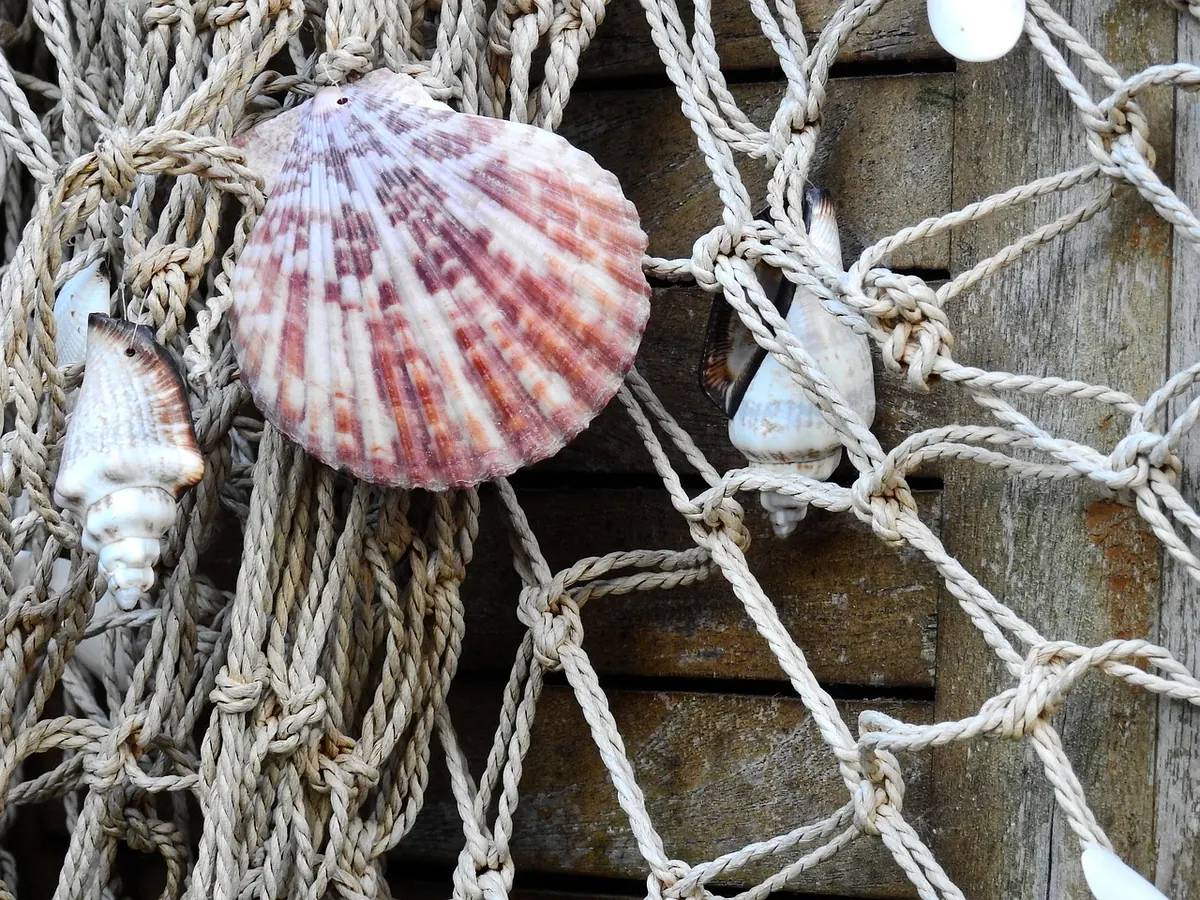
Coastal houses are hard on materials. Salt settles into fibers, sun bleaches color, and damp air lingers long after the fog lifts. Rope can handle this life better than most people expect, but not every rope. The five projects below are chosen for porches, entries, decks, and covered outdoor rooms. They use simple knots, ordinary hand tools, and materials that can be rinsed when the season turns gritty.
Before you cut a single length, decide where the piece will live. A doormat takes grit and damp. A hanging planter takes wind. A curtain tieback mostly takes sun through glass. Match the rope and hardware to the spot, and the finished piece will last more than a season.
Salt is not the only enemy. Ultraviolet light breaks down fibers, and repeated wetting and drying weakens knots. For outdoor coastal work, synthetic rope is usually the safer choice. It resists mildew, dries faster, and holds its shape when the weather changes.
Hardware matters as much as rope. Use 316 stainless steel for fittings that stay outside, or hot-dipped galvanized hardware for structural holds. Plain steel hooks and staples will leave rust streaks on wood, stucco, and rope. Avoid staples that crush the fibers; a screw eye or a properly sized hook is kinder to the rope and easier to inspect.
If a rope label cannot tell you what the fiber is, do not trust it to a beach porch. Buy from a supplier who names the material and whether it is UV-stabilized.
A coiled mat is the friendliest first project. It needs no pattern, only patience and a flat surface. Use 1/2-inch UV-stabilized polypropylene or polyester rope. Polypropylene is lighter and sheds water quickly; polyester holds a tighter, tidier coil.
Set the mat on a porch or in an entry, not in standing water. Shake it out often and rinse it with fresh water when salt spray or sand builds up. A mat that stays soaked will collect grit and smell; one that drains and dries will keep its shape for years.
Wrapping a handrail adds grip and softness, and it hides the wear that coastal weather puts on wood. Use 3/8-inch polyester rope for the wrap and 316 stainless screws or fittings for any hardware. Work on a dry day, because damp rope can shrink or loosen as it dries.
Clean and dry the rail first. Start at one end with a whipped finish, then wrap the rope around the rail in close half hitches, keeping even tension. Do not pull so hard that the rope flattens; you want a firm, comfortable surface. Finish with a second whipping and tuck the tail under the last wraps. Check the rail after a week and tighten any loose sections. Rope wrap can affect grip when wet, so test it before relying on it as a safety rail, and keep the underlying handrail sound and securely fixed.
This is the project that makes a porch feel finished. Use 1/4-inch polyester rope and a stainless ring or hook. Measure the pot or lantern first. Cut four equal strands, allowing enough length for the knots and for the piece to hang at eye level.
Fold each strand in half and attach it to the ring with a lark’s head knot. Separate the strands into pairs and tie a row of square knots a few inches below the ring. Repeat two or three times, spacing the rows evenly, then gather the ends and bind them below the pot. A simple overhand knot with a whipped tail works well. For a lantern, leave the bottom open so heat can escape; for a planter, add a small stainless saucer to catch drips. Take hanging pieces down before a storm and check the ring and knots for chafe.
Not every coastal project needs a workbench. Rope towel hooks and curtain tiebacks are quick, useful, and easy to refresh when the rope fades. Use 3/8-inch polyester rope for hooks and a softer braided rope for tiebacks. Fit a stainless screw hook into a stud or a suitable anchor, then form a loop with a bowline or a spliced eye. Keep the loop large enough for a beach towel but small enough that it does not slip off.
For tiebacks, braid three lengths of rope, finish both ends with whipping, and add a small loop at each end. A stainless cup hook on the window frame holds the tieback neatly. Avoid cotton rope here; it looks soft but stays damp against glass and can leave marks. Rinse the tiebacks when you clean the windows and let them dry fully before hanging them again.
A rope basket earns its place by the door. Use it for towels, flip-flops, shells, or kindling. Coil 1/2-inch polyester rope into a flat oval base, then build up the sides by stacking the coils and stitching them together with heavy polyester twine. Sew through the wall of the basket every few inches, working around the circumference in stages so the shape stays even.
Keep the base flat while you work by setting it on a board. When the basket is tall enough, finish the top edge with a whipped binding. If the basket will sit on an open porch, choose polyester rather than natural fiber, and do not leave wet towels inside it. A basket that dries between uses will stay fresh; one that holds a puddle will soon smell like the harbor at low tide.
Salt-friendly rope still needs attention. A little maintenance keeps colors brighter and knots safer, and it gives you a chance to spot wear before it becomes a repair.
Replace any rope that has become brittle, fuzzy, or deeply abraded. Coastal decor should look relaxed, not neglected. With the right fiber and a simple rinse-and-dry routine, these five projects will handle salt air, sandy feet, and long summer afternoons without asking for much in return.
Photo: Bru-nO / Pixabay
Six winter knot projects in thick rope and chunky yarn — wreath, doorstop, garland, trivet, basket and ornaments —...
A guide to traditional Italian maritime knots — bowline, clove hitch, constrictor — and how their forms translate...
Copyright © 2026 Nodi Lontano. All Right Reserved.