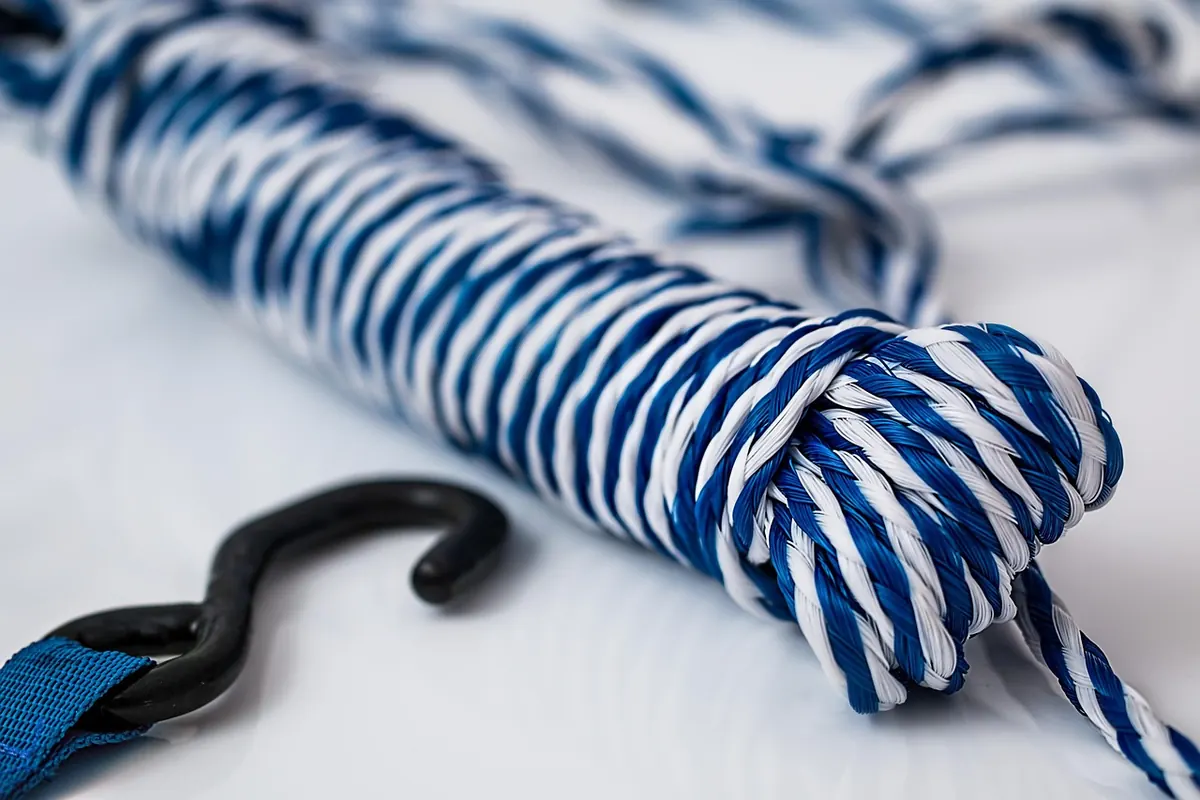
Winter Decorative Knots: 6 Cozy Projects Using Thick Rope and Yarn
October 30, 2026 - Decorative Knots

October 29, 2026 - Knot Types
Stand on the quay at Camogli while the boats come in and you will see the same three movements repeated a hundred times: a loop turned, a working end passed through, a knot settled with the flat of a hand. Nothing about it looks like heritage. It is simply how a line gets made fast. That ordinary gesture is where Italian knot craft begins — not in a workshop, but in the small, unhurried business of keeping a boat attached to something.
The knots themselves have not changed much in a few centuries. What has changed is where they end up. A gassa d'amante that once held a halyard now holds a pot of ivy above a kitchen window, and the sailor who tied the original would recognise it instantly. Both halves of that sentence are worth looking at.
Italy's maritime republics — Amalfi, Pisa, Genoa, Venice — ran on rope. Cordage was expensive, and a knot that slipped or jammed cost gear, time, or worse. That economics produced a conservative repertoire: a small number of forms, repeated until the hands did them without instruction. Knots were taught by imitation, a father's hands over a child's, a boatswain's over a deckhand's, and the teaching happened in weather rather than in classrooms.
That oral transmission is why names shift from port to port. A bowline is a gassa d'amante almost everywhere in Italy, but many lesser working knots travel under two or three regional names. Printed naval manuals from the nineteenth century onward, and later the training of the navy, began to standardise the vocabulary, yet the older words survive on the quay.
The decorative side has the same root. Sailors on watch had idle hands and a steady need for grip, fenders, lanyards and bell ropes, and the sennits they tied for a knife lanyard were the same structures they tied for a bell pull. Macramé, from the Arabic miqramah, moved around the Mediterranean with traders and crews, and by the nineteenth century the technique had crossed from ships into parlours and convents as ornamental work. The continuity matters: decorative knotting is not a separate craft. It is the shipboard one with the load taken off.
You do not need fifty knots to work in this idiom. You need a handful, tied well, plus the willingness to repeat them until they are boring.
A working knot is judged on whether it holds. A craft knot is also judged on how it looks, and that means dressing it: arranging the strands so they lie parallel, the crossings tidy, the whole form symmetrical. Tie it loosely. Then take the slack out of the standing part a little at a time, working the turns with your fingertips as you go. Yank it tight too early and the knot sets in the wrong shape, and no amount of tugging will fix it. Tighten to about half load, look at the form, then firm it up.
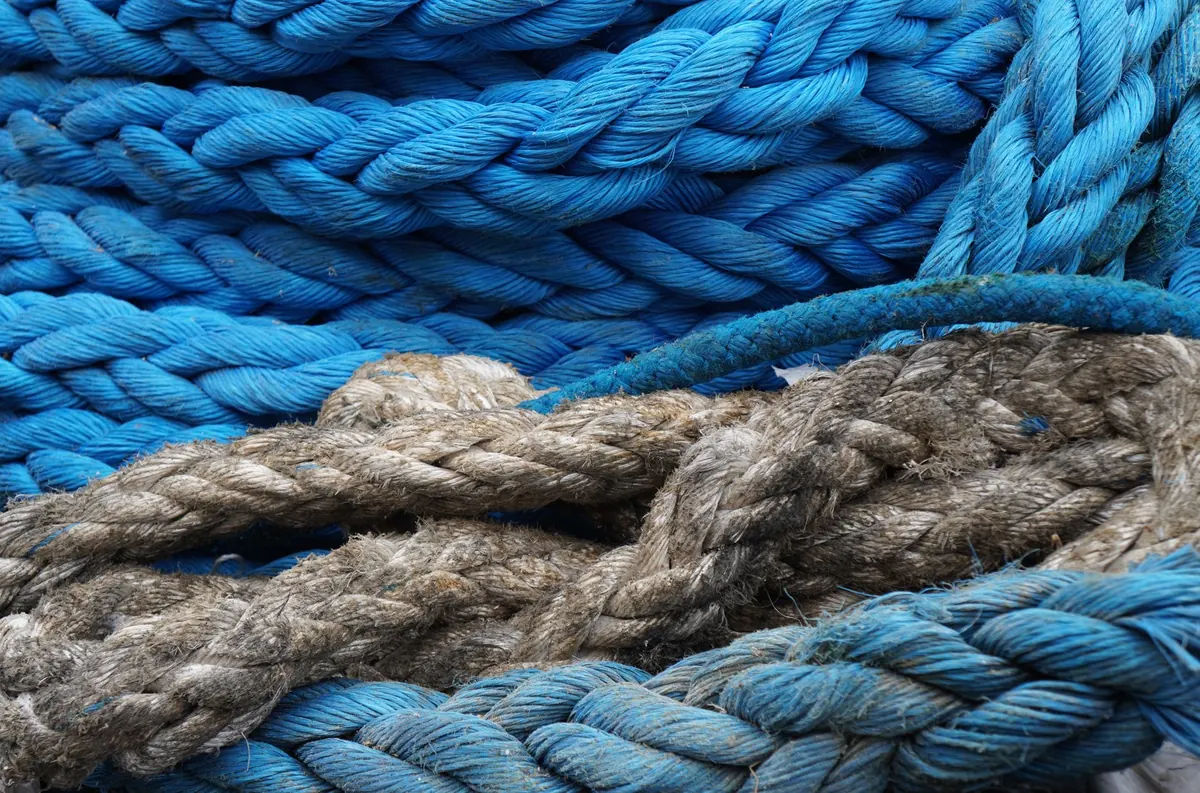
A bowline in 2mm cord is a small tangle. The same knot in 12mm three-strand hemp is architecture — you can see exactly how it is built. Thicker rope flatters traditional forms, which is why fenders and bell ropes have kept their proportions for so long. The other useful change is restraint: knots read best in one colour and one fibre, where the structure has to carry the piece instead of the palette.
A bowline at the top of each cord, gathered into a ring, plus a few square knots down the length, is the whole of many contemporary hangers. Choose the bowline here precisely because it does not jam; the hanger can come down for watering and go back up without a fight.
This is where three-strand natural rope still earns its place. A rope fender is a long sequence of half hitches worked around a core, and the texture comes from the lay of the rope rather than from the pattern. The traditional bell rope — a square-knot or crown sennit — behaves the same in a stairwell as in a belfry, and takes a good weight without stretching into a thin line.
Key fobs, lanyards, bag handles and bracelets cover most of what people actually want. A monkey's fist, a Turk's head band and a square-knot sennit will handle nearly all of it. One practical caution: anything worn daily meets abrasion and sweat, so choose polyester or waxed cotton rather than soft untreated hemp, which fuzzes and darkens within weeks.
Three-strand rope is the honest choice for anything that should look maritime. It holds a knot's shape, shows the lay, and can be spliced if you want a permanent eye. Braided cord is smoother and better for tight, even macramé work, but it hides the structure that makes these knots interesting. For indoor pieces, cotton is pleasant in the hand and takes dye well; for anything outdoors, polyester lasts longer and resists rot. Whipping the cut ends with waxed thread takes five minutes and is the difference between a piece that survives a year and one that unravels in a fortnight.
You need two metres of 4mm cotton cord, a split ring, scissors and a little tape for the ends.
The first one takes an evening. The third takes twenty minutes, and by then your hands will have stopped asking questions.
Choose a single knot this week — the bowline is the sensible place to start — and tie it twenty times in three different ropes. Tie it with gloves on. Tie it in poor light. A knot you can form without looking is the foundation for everything else, and the difference between a decorative piece that holds its shape and one that sags is almost always repetition rather than talent.
Keep a two-metre length of 6mm rope in a bag and practise while you wait for something. Then take it to a harbour. Fishermen are generally happy to correct a knot, and the correction is usually the detail no diagram ever showed you.
Photo: Budget Bizar / Pexels
Six winter knot projects in thick rope and chunky yarn — wreath, doorstop, garland, trivet, basket and ornaments —...
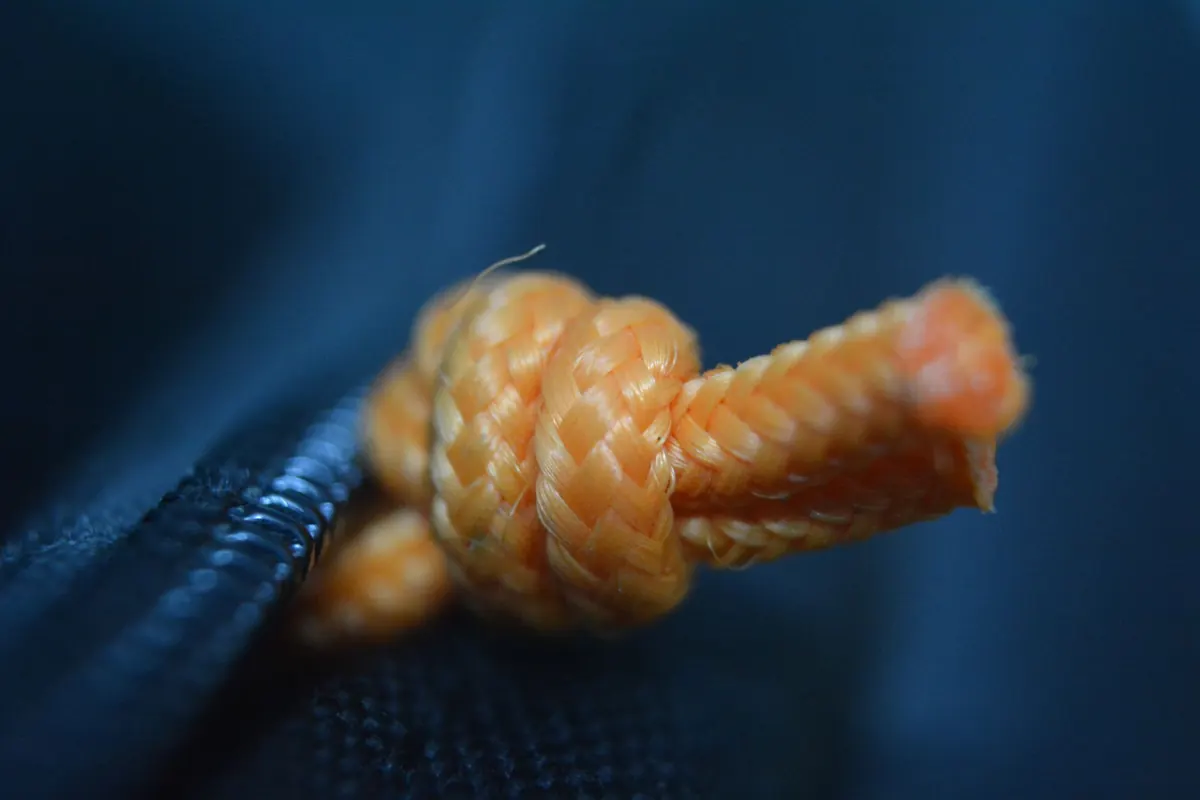
A practical pre-hang checklist for knot projects: how to dress, tug and load-test your knots, judge tail length, and...
Copyright © 2026 Nodi Lontano. All Right Reserved.